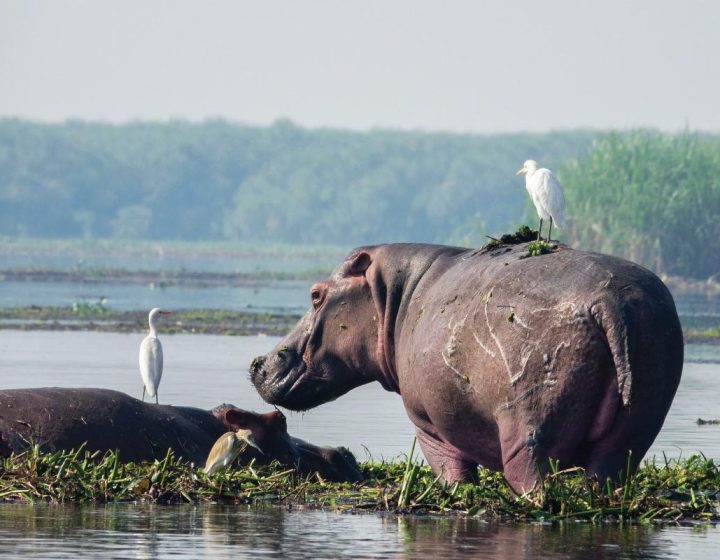

UGANDA is rich with diverse wildlife species and is unmatched on the continent as a bird watching destination. There are over 1000 bird species recorded in Uganda. Besides, the parks are also rich in Flora and Aqua fauna. Much of the south is heavily influenced by one of the world’s biggest lakes, Lake Victoria, which contains many islands. Lake Kyoga is in the center of the country and is surrounded by extensive marshy area. Although the country is landlocked, it contains many large lakes besides Victoria and Kyoga, there are Albert, Edward and the smaller Lake George. The country lies almost completely within the Nile basin, the Victoria Nile drains from Lake Victoria into Kyoga and into Albert on the Congolese border. It then runs northwards into south Sudan. An area in eastern Uganda is drained by the Suam River, part of the internal drainage basin of Lake Turkana. The extreme north-eastern part of Uganda drains into the Lotikipi basin which is primarily in Kenya
Uganda has 10 National Parks managed by Uganda Wildlife Authority (UWA). The parks are protected and conserved purposely for wildlife management with minimal, planned human development activities. The National parks include; Bwindi Impenetrable Forest National Park (BWNP), Kidepo Valley National Park (KVNP), Kibale Forest National Park (KNP), Mount Elgon National Park (MENP), Lake Mburo National Park (LMNP), Mgahinga Gorilla National Park (MGNP), Rwenzori Mountains National Park (RMNP), Queen Elizabeth National Park (QENP), Murchison Falls National Park (MFNP) and Semliki National Park (SNP). These parks display the best in East Africa. Their rift valley landscapes and tropical forests make dramatic backdrops to an extensive variety of flora and fauna.
Uganda has got wildlife reserves also popularly known as Game Reserves are as well protected areas under the management of Uganda Wildlife Authority (UWA). The reserves give some spectacular scenery and are habitants to some of the key species of fauna and flora. They are worth exploring.There are 12 wildlife reserves, some of which include; Pian Upe wildlife reserve (PUWR), Toro Semliki wildlife reserve (TSWR), Katonga wildlife reserve (KWR), Matheniko Bokora wildlife reserves (MBWR), Ajai wildlife reserve (AWR), Kyambura wildlife reserve (KWR), Kigezi wildlife reserve (KWR), among others. Uganda is home to vast number of species, including a population of Mountain gorillas in the Bwindi Impenetrable National Park, Gorillas and Golden monkeys in the Maghinga Gorilla National Park, and Hippos in the Murchison Falls National Park.
Uganda has warm tropical climate with temperatures falling in the 25 -29 degrees Celsius range on an average. The months from December to February are the hottest, but even during this season the evenings can be chilly with temperatures 17 – 18 degrees Celsius range. The rainy seasons are from March to May and from September to November during these months, heavy rains can make roads and terrains hard to traverse.
dsdsdsds
Top places you must visit in Uganda include the following;
Bwindi Impenetrable National Park is located in the southwestern part of Uganda on the rim of the Rift Valley. The hillsides which are mist-covered are sheltered by one of the ancient and very biologically varied rainforests in Uganda that dates back to more than 25,000 years, comprising of about 400 varied plant species. More notably, this “impenetrable forest” in addition protects an predictable 320 population of mountain gorillas – approximately half of the population in the world, among which are a number of habituated groups, that can be tracked by visitors.Bwindi is habitat to more than half the world’s population of Mountain Gorillas. actually there are over 300 mountain gorillas living here. Gorilla devotees for Uganda tours from different corners of the world to enjoy this Ultimate Safari in Uganda – Mountain Gorilla tours / tracking in Bwindi Impenetrable Forest.The word “Bwindi” means “darkness” and taking a hike this magnificent forest will certainly unveil to you the reason why the forest was named so. You will as well be in position to fast tell why actually the forest is also regarded as Impenetrable. One requires to be realistically physically fit to take part in this mountain gorilla tracking / trekking adventure because it may involve climbing the steep terrain.
In addition to the endangered impressive mountain gorillas there are also 346 bird species and more than 200 butterfly species, about 324 species of trees, ten of which are only found in this areas in the whole of Uganda. This is really a destination to explore. Because there are few habituated Gorillas living here (gorillas that have been trained to withstand human presence and not likely to attack), actually the time offered to see them is limited and so are the permits which currently are offered at a cost of $700 per individual. No person ever complains after spending some time with these very fascinating Mountain Gorillas in Uganda within Bwindi Impenetrable Forest, which is among the most stunning rainforest anyone will ever come across.
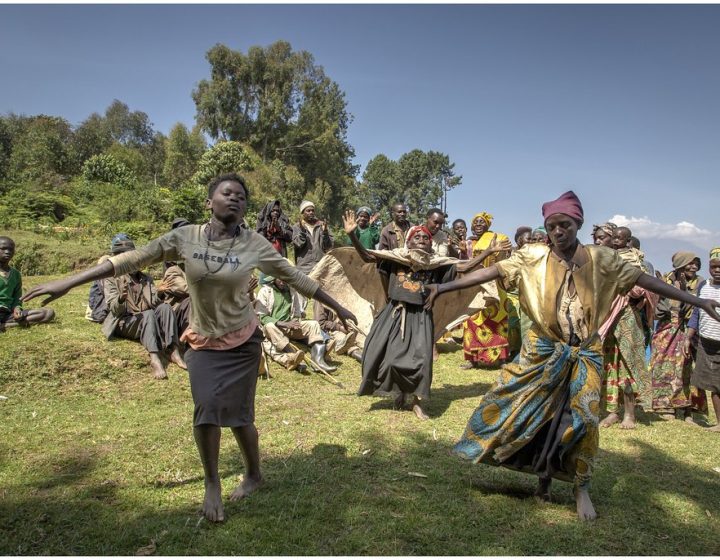
This biologically varied region as well offers shelter to a additional 120 mammals, among which are various primate species like the baboons plus chimpanzees, in addition to elephants as well as antelopes. Furthermore, there are about 350 bird species supported within this forest, among which are twenty three Albertine Rift endemics. The adjacent towns of Nkuringo as well as Buhoma offer an remarkable collection of luxury lodges, budget campsites, restaurants, rustic bandas and craft stalls in addition to guiding services. A 3 day gorilla safari tour will cover plentiful Opportunities to discover the neighboring Bakiga plus Batwa Pygmy people’s cultures which they well showcase in performances plus workshops as well as on guided village walks.
There’s nothing like up-to-date, relevant travel information direct from the experts – get essential Uganda travel advice before you go.
Money & Spending
Uganda’s unit of currency is the Uganda Shilling and you’d be advised to get some on arrival as it is far easier to buy drinks, curios and meals in the local currency when travelling between destinations.
US Dollars are widely accepted throughout the country though note that cash is best: traveller’s cheques and credit cards can be used at most lodges and in Kampala but attract hefty transaction fees.
Tipping
Tipping of around 10 – 15% is customary in Uganda for good service. Tips are usually given in Uganda Shillings or US Dollars. If you are doing a gorilla trek, tipping is at your discretion – your porter (if you choose to take one) should usually receive the highest tip, with a second tip distributed between your guides, trackers and security personnel.
For in-depth tipping guidelines, enquire with one of our Africa Safari Experts – they’d be happy to share their knowledge with you.